
Evolving Healthcare: Leadership And Well-being Beyond A Single Identity
Sep 16, 2026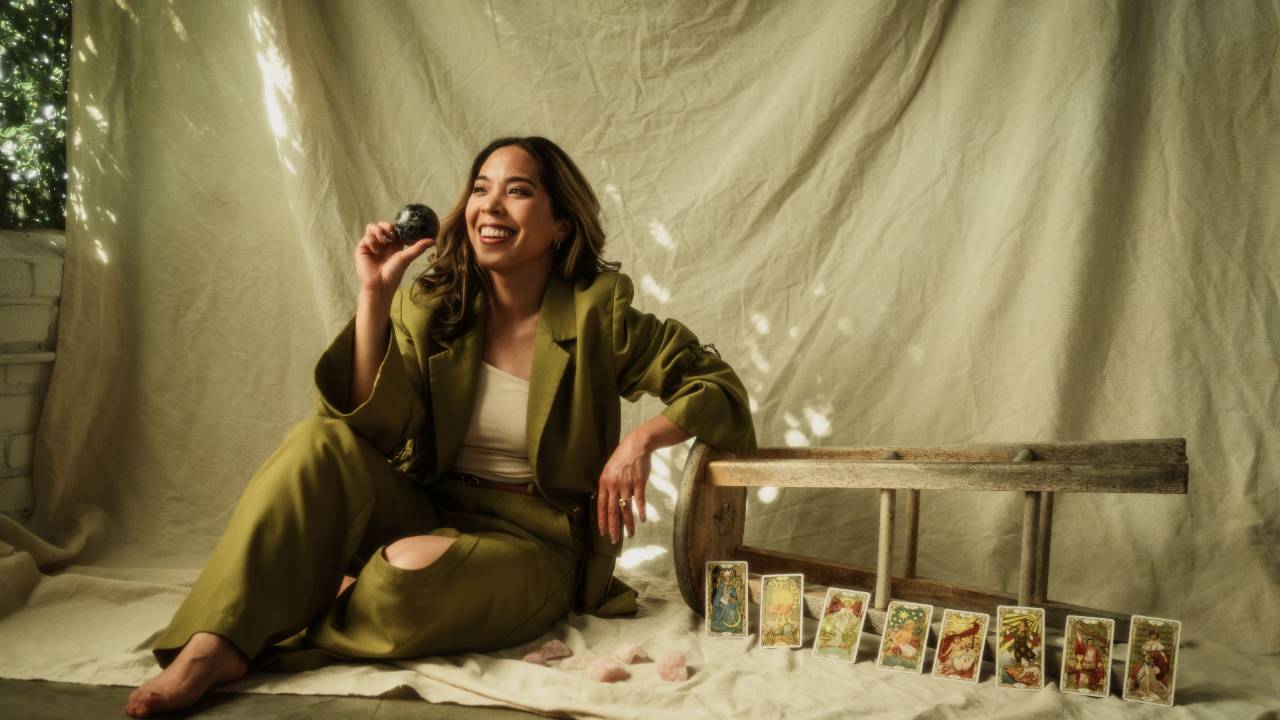
Charlene Platon is a healthcare leader and founder whose career journey sends one key message: you don't have to choose between passion, purpose, impact, and the multidimensional nature of your personality and potential.
A co-founder of Fifth Window, a nurse-founded wellness consulting company, founder of Charlene Platon LLC, speaker, and clarity consultant, Charlene has shared her message on global stages such as the United Nations and actively challenges the idea that we have to fit ourselves into a single professional identity. Her story explores what can emerge when we embrace the different aspects of who we are and allow them to shape our careers, businesses, and ambitions.
Charlene was also among the first clients to experience the Accelerate Pathway approach and apply it to the growth of both Fifth Window and herself. Her experience demonstrates how a consciousness-rooted approach can support not only business evolution, but also the personal development, self-trust, and expanded thinking of the founder behind the business.
Can you take us back to the beginning of Fifth Window? What was happening in your own life or career that inspired you to launch it, and what did you feel was missing in the way well-being was being approached within medical and healthcare communities in the US?
Fifth Window really began during a time when healthcare professionals were being asked to give so much of themselves.
I had already spent years as a nurse and healthcare leader, and during the COVID-19 pandemic, the conversations around clinician well-being became more urgent than ever. But I also felt that so much of what we were calling “well-being” was focused on helping people cope after they were already depleted. It could sometimes feel like one more thing healthcare professionals were supposed to do: another resource, another module, another task, rather than something that was truly integrated into how we experienced our work and our lives.
Fifth Window was created because we wanted to approach well-being differently. We initially built it as a wellness app for nurses, connecting them with curated wellness experiences, resources, and community. And then later, we found that at the heart of it was a very simple idea - how do we help nurses reconnect with what brings them joy?
That question represents how the company has evolved. Today, Fifth Window looks different from what we originally imagined, but the purpose is still very much the same. We want healthcare professionals to remember that their own humanity matters, too, and that joy, connection, reflection, and well-being aren't rewards we earn after taking care of everyone else. They are part of what allows us to continue showing up meaningfully for ourselves, our patients, and our communities.
For someone discovering Fifth Window for the first time, how would you describe what you do and the change you create within organizations and medical communities?
Today, I would describe Fifth Window as a nurse-founded wellness consulting and education company for healthcare professionals.
We develop experiences around well-being, joy, emotional intelligence, connection, and self-reflection for healthcare organizations, nurse residency programs, professional associations, conferences, and other healthcare communities.
Alongside Fifth Window, I also have a separate practice through Charlene Platon LLC, where I work as a clarity consultant with high-achieving professionals who may be successful on paper but still feel stuck, disconnected, or unsure about what comes next. That work is more individual and helps people reconnect with their values, intuition, and self-trust so they can make decisions that feel more aligned.
To me, both bodies of work are connected by a larger mission of helping people align more with themselves.
The change we're trying to create is bigger than simply telling healthcare professionals that they should practice self-care. I think healthcare has historically been very good at asking people to be resilient. But we also need to ask: what are we creating for people to be resilient within? How do we create environments where people can actually feel connected, supported, valued, and human?
For me, well-being isn't separate from leadership, culture, or the way people experience their workplace. They're interconnected. That's also why Fifth Window’s motto is to “nurse your joy.” Joy doesn't mean that every day in healthcare is going to be easy or positive. It means intentionally creating opportunities to reconnect with meaning, relationships, purpose, and the parts of ourselves that can easily disappear when our work becomes all-consuming. Ultimately, I want healthcare professionals to feel that caring for themselves and caring deeply about their work don't have to be opposing ideas.
What does support through Fifth Window look like in practice? How do you work with organizations, nurses and other medical professionals to help them prioritize their well-being alongside the demands of their roles?
A lot of our work now happens through education and experiences, including workshops, webinars, conference presentations, nurse residency programming, and customized engagements with healthcare organizations.
What is important to us is that the experience doesn't just become another lecture about well-being. We focus on making it reflective, interactive, and human. We might explore emotional intelligence, mindfulness, joy, connection, self-stewardship, or how people can become more aware of what they need in a particular season of their lives and careers.
And I think that's an important distinction. The message isn't, “Here are ten more things you should be doing to take care of yourself.” Healthcare professionals already have enough on their plates. Instead, we try to create a space where people can stop and reconnect with themselves.
One of the things I've increasingly come to believe is that joy is not a reward for having a good day. We don't have to wait until the staffing is perfect, the inbox is empty, the project is finished, or everything around us has settled down before we are allowed to experience something meaningful.
Sometimes the intervention can be much smaller: a moment of connection, reflection, creativity, gratitude, mindfulness, or simply remembering why you entered this work in the first place. That's the kind of experience we want people to leave with; not more homework, but more permission.
That philosophy also carries into my individual clarity consulting work through Charlene Platon LLC. There, the focus is about helping them slow down enough to notice the patterns, values, fears, and inner knowing that may already be shaping their choices, and then helping them move forward with greater clarity and self-trust.
As an intuitive coach, you bring energy healing and well-being practices into a world that is often highly clinical, evidence-led and fast-paced. Why do you believe it is important to create space for these practices and ways of working within the medical communities?
One of the most interesting parts of my own journey has been realizing that I don't have to choose between being evidence-based and being intuitive. I am a nurse practitioner and healthcare leader. Evidence, critical thinking, science, and discernment are incredibly important to me. At the same time, I've also seen how much of the human experience can't be understood through data alone.
Healthcare professionals spend so much of their lives thinking, analyzing, solving problems, anticipating needs, and taking care of other people. We can become incredibly skilled at listening outward and lose the ability to listen inward. That's where I think practices involving mindfulness, creativity, reflection, intuition, or energy work can create something different.
I'm also very intentional about not presenting intuitive or energy practices as medical treatment or substitutes for evidence-based care. I see them as complementary ways of creating space for reflection and self-awareness.
My own work increasingly sits at that intersection. Through Charlene Platon LLC, I work as a clarity consultant with high-achieving professionals who are often navigating overthinking, perfectionism, validation-seeking, or the feeling of being successful but still somehow stuck. The goal is to create space for clarity, to help professionals hear themselves more clearly, reconnect with what they value, and strengthen their ability to trust their own decisions.
Depending on the person and the setting, that can include coaching, values exploration, intuitive practices, Human Design, or tarot. I see these as tools for reflection and meaning-making, not as a replacement for medical treatment or evidence-based care. For me, the most powerful work happens when we can hold both discernment and intuition at the same time.
I think healthcare needs more spaces where people are allowed to be whole human beings, not only clinicians, leaders, or professionals, but people with emotions, creativity, intuition, uncertainty, and inner lives. Creating space for those dimensions can help people reconnect with themselves in ways that a purely productivity-focused or clinical lens may not.
Building a business and community around something deeply personal and purpose-led comes with its own challenges. What have been some of the biggest lessons you've learned about yourself, leadership, and building a business through your founder journey so far?
One of my biggest lessons has been learning the difference between the vision and the vehicle.
When we created Fifth Window, we had a very specific idea of what it would become. We built a technology platform and mobile app and put an incredible amount of energy into that version of the business.
But over time, we realized that the way we could create the greatest impact wasn't necessarily through the original vehicle. Today, Fifth Window is much more focused on consulting, education, speaking, and creating experiences for healthcare organizations and professional communities.
Earlier in my founder journey, I think I might have interpreted a pivot as meaning something hadn't worked. Now I see it very differently. Sometimes, evolving the business is an act of listening. The mission can remain while the form changes.
Launching Charlene Platon LLC has reinforced that lesson in another way. I've realized that I don't have to force every part of my purpose into one company. Fifth Window focuses on professional organizations, healthcare professionals, education, and joy-centered experiences, while my clarity consulting work gives me space to work more deeply with individuals around alignment, self-trust, career decisions, and personal growth. Both can be true, and they can support different expressions of the same values.
I've also learned how much entrepreneurship brings you face-to-face with yourself. It can surface perfectionism, comparison, fear of making the wrong decision, attachment to outcomes, and the desire for external validation. I've had to learn that I can't build something meaningful while constantly asking the outside world whether I'm doing it correctly.
In many ways, the founder journey has taught me the same thing leadership has: you need strategy and data, but you also need self-awareness, humility, relationships, and the willingness to change direction when something is no longer aligned. And I've learned that letting go of one version of a dream doesn't mean you're letting go of the dream.
What advice would you give to someone who has an idea they believe in but is currently working full-time and wondering whether they can realistically build something on the side? What do you wish you had known when you were at that stage?
I would tell them: you do not have to quit your job to prove that you believe in your dream. I've built Fifth Window while also maintaining a full-time career in healthcare leadership, and now I am also building my clarity consulting practice through Charlene Platon LLC. I think we sometimes romanticize entrepreneurship as this moment where you take a giant leap and leave everything behind. It doesn't have to look that way.
Your full-time role can actually give you stability while you experiment. You can start small, test the idea, talk to people, create one offering, and learn what people actually need before investing enormous amounts of time or money into what you think they need. That's something I'm practicing now with my own clarity consulting work: building it intentionally, learning from real clients, and allowing the offers to evolve instead of expecting the entire business model to be perfect from day one.
I would also tell someone that having more than one meaningful path does not necessarily mean you are unfocused. Sometimes a portfolio of work can be the most honest reflection of who you are. The important part is being realistic about your capacity, protecting your energy, and deciding what deserves your attention in each season.
I also wish I had understood earlier that the first version of the dream doesn't have to be the final version. You're going to change, and your customers are going to teach you things. Your life will change. The business may eventually become something you couldn't have imagined when you started.
And I would tell people not to wait for certainty, because certainty will be available at the start. You don't have to know whether this idea will become your full-time career, a side business, a creative project, or something entirely different before you begin. You can simply ask: what is the next aligned step I can take with the information I have right now? I've learned to be much less married to the outcome and much more interested in whether I'm becoming someone who trusts herself enough to keep moving.
Impact In Action
Every interview in Impact In Action concludes with one signature question, inviting each individual, business, or organisation to reflect on the shifts and impact inspired by their work with Kristina and KgrowtH.
You were amongst the first founders to experience Kristina's consciousness-rooted approach to driving founder and business growth, which is now at the core of our Accelerate Pathway programme for founders and businesses. Looking back on your sessions with Kristina, what impact has her approach had on the development of Fifth Window, the way you have approached your business, and your personal development as a founder?
What I've come to appreciate about a consciousness-rooted approach to entrepreneurship is the recognition that the development of the founder and the development of the business aren't separate things.
We can spend so much time asking, what's the strategy? What's the next milestone? How do we grow? What should we do next?
But some of the more important questions are internal: why am I making this decision? Is it coming from fear or alignment? Am I trying to prove something? Am I holding onto a version of the business because it's still right, or because I'm afraid of what it means to let it go? That way of thinking has become increasingly important to me.
Fifth Window has evolved considerably since we began. We've moved from being primarily a technology and wellness-platform company into consulting, education, speaking, and experiences. And I think becoming more comfortable with that evolution required me to loosen my attachment to what I thought the business was supposed to look like.
It's also influenced the way I think about growth. Growth isn't automatically synonymous with doing more, scaling faster, or becoming bigger. Sometimes growth means becoming clearer. Sometimes it's simplifying, and sometimes it's recognizing that an opportunity isn't aligned anymore.
And personally, that's been one of the most meaningful parts of my founder journey: learning to trust myself more deeply rather than constantly looking outside of myself for confirmation that I'm making the right decision. Working with Kristina has helped me solidify this lesson that self-trust involves looking within and seeing the possibilities that can happen when we think larger and expand ourselves and our identities.
One of the clearest examples of that expansion has been giving myself permission to build something under my own name through Charlene Platon LLC. My clarity consulting work allows me to support people beyond the organizational healthcare space and to bring together parts of myself that I once might have kept separate: leadership, emotional intelligence, intuition, creativity, coaching, and personal growth. It has helped me see that I do not have to fit into only one professional identity in order to be credible or impactful.
I've also learned in working with Kristina that I previously had a tendency to think very small about what was possible for me. It has been freeing to see that there can be much more potential when I stop defining myself only by what I have already done and allow myself to imagine what else I could create. The more I have developed that awareness, the more I realize that how I build something matters just as much as what I build.